81st General Assembly of the Inter American Press Association

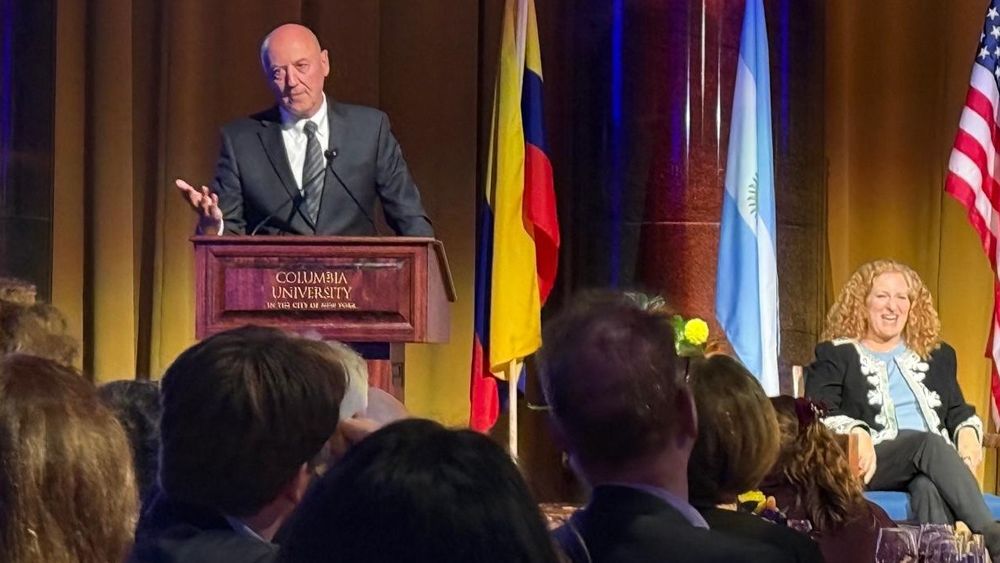
IAPA President José Roberto Dutriz delivers his opening speech on Thursday in Punta Cana.
81st General Assembly of the Inter American Press Association
Punta Cana
October 16th, 2025
Mr. President of the Dominican Republic, Luis Abinader
Ladies and gentlemen, colleagues, friends,
It is a great honor to open this 81st General Assembly of the Inter American Press Association. We gather here in Punta Cana, a place of encounter and beauty—but also of reflection and commitment—before a reality that challenges us with force: freedom of the press and of expression are going through a period of threats and unprecedented challenges in our recent history, as grave as they are diverse across the continent.
I want to express my special gratitude to President Luis Abinader for welcoming us to the Dominican Republic. I also extend my recognition to OAS Deputy Secretary General Laura Gil, who joins us on this occasion.
In the coming days, we will debate the main challenges of contemporary journalism, with special attention to press freedom, media sustainability, and the impact of artificial intelligence. We will do so through a high-level program bringing together some of the most outstanding figures in continental journalism. My warmest welcome to all participants.
During the past six months, we have witnessed how journalism faces a landscape marked by the deterioration of working conditions for journalists and media outlets; by rhetoric loaded with resentment and stigmatization; by judicial and administrative restrictions; and by persistent violence that forces many colleagues to practice their profession in conditions of exile or forced displacement.
At this point, I want to highlight the importance of the IAPA’s international missions, which have been and continue to be a fundamental instrument for supporting journalists and societies at risk. These visits allow us to bring solidarity, amplify the voices of those attacked, engage with authorities, and remind everyone that the inter-American community is watchful and will not tolerate violations against freedom of expression.
In the past year, IAPA missions were carried out in Guatemala, Panama, Costa Rica, Peru, Washington DC. Being on the ground—listening to journalists, engaging in dialogue with authorities, supporting media outlets, and documenting concrete situations—remains one of the most noble and effective tasks of our organization.
In Guatemala, we experienced the hope represented by President Bernardo Arévalo’s signing of the Chapultepec Declaration—an encouraging gesture amid persisting shadows, such as the unjust imprisonment of José Rubén Zamora. In Costa Rica and Peru—two democracies historically considered solid—we observed worrisome setbacks: stigmatizing rhetoric, judicial obstacles, and restrictions on access to information. These missions remind us that the defense of press freedom allows no truce or comfort zone: it requires constant presence, active solidarity, and political advocacy.
In Panama, we held meetings with President José Raúl Mulino and with the three branches of government. The Chapultepec and Salta II Declarations were also signed.
Missions also generate a multiplying effect: they shine light on contexts where censorship seeks to obscure reality, open channels of dialogue with authorities, and, above all, provide essential support to colleagues who often feel they are fighting alone against immense powers.
In Washington, D.C., we held discussions with the new Secretary General of the OAS, Albert Ramdin, and Laura Gil, who is here with us today. With both, we analyzed the structural situation of the press in the region and concrete initiatives to continue collaborating with the OAS in defending freedom of the press and freedom of expression as pillars of democracy. With the same vision, we also held meetings with the presidents of the Inter-American Development Bank (IDB) and the National Endowment for Democracy (NED), Ilan Goldfajn and Damon Wilson, respectively, along with their teams.
Allow me now to pause on a particular concern. In the United States—a country historically regarded as a beacon of democratic freedoms—we have watched with alarm the growing deterioration of the climate toward the press. The government’s offensive against media and journalists, the use of lawsuits as instruments of harassment, and threats to broadcasting licenses have revealed a dangerous drift. This is not only about attacks on newspapers or television networks; it is about the weakening of the most influential democratic system in our hemisphere. And what happens in Washington, let us not deceive ourselves, reverberates throughout the Americas.
At the same time, the situation in countries such as Cuba, Nicaragua, Venezuela, and El Salvador, confirms an authoritarian drift and growing repression of the press. In these contexts, journalism has been criminalized, independent media outlets shut down, and persecution has forced hundreds of journalists into exile and many news organizations to continue reporting from abroad. These cases starkly reveal how far governments can go when they undermine institutional order in their efforts to control the flow of information and silence critical voices.
If we had to choose a symbol of this period, it would undoubtedly be the creation of the Latin American Network of Journalism in Exile (RELPEX)—the result of the IAPA’s decision to prioritize support for journalists and media forced to flee their countries due to persecution by authoritarian regimes. Since its launch in 2024, with the valuable backing of the National Endowment for Democracy (NED), RELPEX has become a vital space for dozens of journalists forced into exile by persecution and censorship.
Today, I am proud to announce that the IAPA has secured resources to strengthen this project for the next two years, ensuring that colleagues in exile receive support, visibility, and tools to continue their work. Because exile must not translate into silence, but into active resilience—proof that neither prison, nor banishment, nor death threats can silence humanity’s need to tell the truth.
Alongside this urgent defense of those facing persecution, we have placed great emphasis on the future and sustainability of our profession. Here I want to highlight the role of our Press Institute and its partnership with the Google News Initiative. During this period, we advanced into the second phase of the Digital Revenue Accelerator, a laboratory that has supported dozens of newsrooms across Latin America in diversifying revenue sources, strengthening subscription models, and innovating in digital strategies. These laboratories remind us that press freedom is not defended only against governments—it is also secured by ensuring the economic viability of independent journalism.
Nevertheless, perhaps the most complex challenge we face today is disinformation. In a media ecosystem saturated by social networks, opaque algorithms, and the rapid rise of generative artificial intelligence, lies travel faster than facts, and manipulation erodes public trust. We have seen how, in different countries, governments themselves exploit this toxic atmosphere to discredit journalists by labeling them as purveyors of “fake news.”
That is why the IAPA has worked on initiatives such as the Global Summit on Disinformation, which brought together journalists, academics, technologists, and civil society actors. From those conversations, a clear consensus emerged: the fight against disinformation requires transnational collaboration, transparency from major tech companies, media literacy for citizens, and, above all, that journalism reinforce its own standards of quality and verification—to be a beacon amid the chaos.
This past year has undoubtedly been one of enormous challenges, but also of achievements that reaffirm our mission. We have supported persecuted journalists, denounced abuses in countries large and small, built networks to sustain professional resilience, and innovated in laboratories that demonstrate journalism has a future—if it knows how to reinvent itself.
But we cannot ignore that we find ourselves at a critical juncture of deep democratic decline. In this context, the challenges we face are too complex for each outlet, each organization, or each newsroom to face alone. The response must be coordinated: media, international organizations, technology companies, universities, and civil society must join forces with strategic vision to defend the integrity of information. Only then can we ensure that, in the face of the storm, journalists and media continue to fulfill their role as pillars of democracy.
And despite all these difficulties, we must highlight one reason for hope: even under adverse conditions, journalism in the Americas continues to produce work of remarkable quality. Courageous investigations, innovative storytelling, and in-depth coverage continue to demonstrate the social relevance of our craft. That tells us something very clear: journalism is wounded, yes—but it is far from defeated.
As we are opening this Assembly in Punta Cana, I invite you to renew our commitment to the essential value that gives meaning to our profession: the right of societies to be informed. Without independent journalism, there can be no democracy. And without democracy, there can be no dignified future for our peoples.
Thank you very much.