Report on the State of Press Freedom in the Americas
Report on the State of Press Freedom in the Americas
October 17, 2025
Increased pressures against journalistic work has accelerated in recent months.
At the Inter American Press Association, we continue to stress that freedom of expression and freedom of the press are essential elements for the preservation of democracy.
However, reports from across the region reveal that, despite constitutional protections in some countries, daily practice has been undermined by various forms of aggression, compromising citizens’ right to be fully informed.
Harassment and stigmatization by those in power, the strategic use of judicial harassment and legal restrictions; violence, impunity, forced displacement, economic pressure, manipulation of state advertising, and digital control and censorship have all been documented—from Canada to Argentina.
I. Official Harassment and Stigmatization from the Highest Levels of Power
The use of disparaging and stigmatizing rhetoric by high-level officials, including presidents, has become a structural threat to journalistic work.
• Argentina: Press freedom was affected by verbal harassment from the highest levels, with President Javier Milei at the center of a strategy to discredit journalists and critical media. The phrase “we don’t hate journalists enough” became a slogan repeated by the president and his followers.
• Colombia: President Gustavo Petro has engaged in stigmatizing rhetoric, accusing journalists and media outlets—without evidence—of participating in illegal schemes or promoting violence.
• Costa Rica: Government officials have maintained a recurring discrediting discourse. A Constitutional Court ruling forced the president to moderate his language after using insults such as “scoundrels” and “hitmen.” The government runs a segment called Dato mata mentira (“Fact kills lie”) to accuse independent media of publishing falsehoods through distortion.
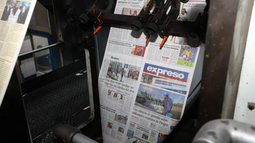
• Ecuador: Officials from Daniel Noboa’s government have used official channels to attack journalists, publicly discrediting outlets such as Expreso and labeling reporters as “terrorists.”
• United States: Former President Donald Trump has promoted direct and rhetorical attacks against the media, equating journalists with terrorists and suggesting that the federal government could revoke licenses of critical television networks.
• Nicaragua: The Ortega-Murillo regime conducts systematic stigmatization campaigns, labeling the independent press as “enemies of the people” or “media hitmen.”
Additionally, the use of digital operators to amplify official narratives and attack critical voices is reported in several countries. In Colombia, the government hires influencers under service contracts who act as digital propaganda operators. In Argentina and Costa Rica, online harassment is amplified by pro-government accounts or by high-ranking officials who have admitted to using trolls.
II. Physical Violence, Threats, and Extreme Risk Contexts
Violence against the press ranges from threats and assaults during protests to murders and remains a central concern across much of the continent.
• Peru: One of the worst years in decades, with two journalists killed (including Raúl Celis in May) and attacks from officials, businesspeople, and criminals. Lima’s mayor, Rafael López Aliaga, said publicly that “Gorriti should be taken out,” referring to IDL Reporteros director Gustavo Gorriti—interpreted as incitement to murder.
• Haiti: The situation is marked by anarchy, chronic impunity, and a security crisis forcing journalists to move under armed protection or in armored vehicles. Some newsrooms were evacuated and looted.
• Ecuador: Physical assaults on journalists were recorded during demonstrations, and correspondent Marcelo Ruiz survived an armed attack.
• Brazil: There was a worrisome rise in intimidation, harassment, and violence from officials, politicians, civilians, and organized crime, including severe physical assaults on several journalists.
• Bolivia: The period was marked by numerous acts of violence and intolerance, including attacks on press crews with fireworks and threats to burn journalists alive by protesters.
• United States: A significant increase was recorded—97 assaults on journalists, mainly during immigration-related protests, where reporters were hit by rubber bullets and pepper projectiles.
• Honduras: Press work was hindered by direct actions from the Armed Forces, creating a pattern of intimidation, defamation, and stigmatization. Salvadoran journalist Javier Hércules Salinas was killed.
III. Judicial Harassment, Legal and Legislative Restrictions
The use of legal and judicial mechanisms to limit criticism and investigative journalism is a systemic threat in several countries.
• Panama: There has been a notable increase in lawsuits (civil and criminal) threatening media outlets’ financial viability, as the law allows asset seizures at the start of proceedings. The “actual malice” principle is not applied, leaving rulings to judges’ discretion.
• Mexico: Judicial harassment has become the main tool of censorship. Legal mechanisms such as “gender-based political violence” and defamation suits are used to deter criticism. Notable cases include the closure of a media outlet and the appointment of a “censor” to oversee a journalist’s work.
• Argentina: There has been an increase in defamation and slander lawsuits filed by officials, including the president, leading to self-censorship. Attempts were also made to undermine the constitutional protection of journalistic sources.
• Peru: Congress attempted to impose “gag laws,” including one requiring media to publish corrections for three consecutive days. The Public Prosecutor’s Office continues demanding that journalists reveal their sources.
• Chile: There is concern about proposed laws with potential repercussions, including a “Gag Law 2.0” that would criminalize the leaking of judicial proceedings.
• Brazil: The troubling pattern of judicial harassment persists in lower courts, although the Supreme Federal Court (STF) has generally ruled in favor of press freedom. A pending STF case could increase penalties for offenses against public officials’ honor.
• Colombia: A bill under discussion would impose fines on journalists even after retractions, representing an additional threat to press freedom.
IV. Censorship, Content Control, and Access to Information
Restrictions on public information, manipulation of public media, and digital censorship remain common tools of control.
Restrictions on public information:
• Argentina: The president has opted not to hold press conferences, and attempts have been made to reinterpret the law to expand exceptions for withholding information.
• Peru: The Executive Branch was the institution that most restricted press work, including President Dina Boluarte’s silence before her removal and the denial of information requests on security grounds.
• Uruguay: Despite an access-to-information law, there is a “bureaucratic lethargy” and “culture of secrecy” among many authorities.
• Guyana: The Access to Information Act remains ineffective; President Irfaan Ali held only three press conferences during his previous term.
Control of public media and state advertising:
• Colombia: The public media system (RTVC) has been used to broadcast government-aligned content, lacking pluralism.
• Costa Rica: The government uses state advertising to reward friendly outlets and punish critical ones, contrary to international standards, and uses public media for government propaganda.
• Guyana: The government withheld state advertising payments to Stabroek News for eight months as a pressure tactic.
• Argentina: The government announced the suspension of official advertising and drastically cut funding for public media.
• Mexico: Lack of transparency in state advertising persists, maintaining discretionary rules that favor some outlets over others.
Censorship and digital harassment:
• Venezuela: Internet blocking is total, affecting more than 80 news websites.
• Ecuador: Coordinated digital attacks led to the removal of critical content from platforms such as Facebook, under the pretext of copyright violations—constituting a pattern of digital censorship.
• Brazil: An STF decision requiring major tech companies to take greater responsibility for moderating illegal content has raised concerns about censorship risks and overreach of judicial powers.
V. Countries under Extreme Control or Severe Crisis
In several nations, freedom of expression is virtually dismantled or facing an existential crisis due to total state control or rampant violence.
• Cuba: Independent journalism operates under constant political repression, hyper-surveillance, physical assaults, and threats of imprisonment under laws that contain over a dozen provisions criminalizing journalists. Independent media are barred from access to public information, official sources, or government events. The state blocks the websites of dozens of media outlets and international organizations.
• Venezuela: Eighteen journalists and media workers remain imprisoned, and further repression is feared. The Resorte Law enforces self-censorship, and internet blocking is total.
• Nicaragua: The regime tightened information control through migration restrictions, closure of professional associations, and harassment of exiled journalists. The physical presence of independent journalism has been nearly wiped out, with 28 of 40 documented violations occurring online.
• El Salvador: Press freedom is being gradually silenced, forcing more than 40 journalists and newsroom staff into exile. The government uses the state of emergency to prosecute journalists and lawyers, accusing them of financial crimes.
VI. Countries with Specific Challenges and Relative Stability
Some countries, while maintaining basic guarantees, face institutional or regulatory challenges.
• Canada: No major incidents were reported, but there were cases of discrimination in access and accreditation to government events. The proposed Bill C-63 (Online Harms Act) raises concern about potential “chilling effects” on speech due to its broad definition of harmful content.
• Costa Rica: Legal guarantees remain in place, with no physical violence or arbitrary shutdowns. However, the government’s stigmatizing discourse and discriminatory use of state advertising remain major challenges.
• Uruguay: No serious incidents affecting press freedom were recorded. The main problem is bureaucratic delays in access to public information. Isolated actions by judges and prosecutors regarding the right of reply also raise concern.
• Puerto Rico: Government agencies continue attempting to limit access to public information, such as restrictions on demographic registry data.
Consequences
The use of the legal apparatus as a weapon of attack and prior censorship demands special attention. The legal defense of journalists and media outlets requires new strategies.
The cascading effect of discrediting rhetoric and attacks from those in power endangers the daily work of our journalists and media organizations.
This semester, we observed that violence against journalists has risen proportionally the most in Peru, while El Salvador has forced the displacement of dozens of journalists, a phenomenon previously seen in Nicaragua, Venezuela, and Cuba.
The unchecked violence in Haiti has made journalistic work virtually impossible.
Of particular concern is the obstruction of free journalistic activity in the United States, ranging from visa restrictions for foreign correspondents and multimillion-dollar lawsuits against media, to threats of revoking broadcast licenses for critical statements and pre-publication reviews demanded by the Pentagon. Such actions risk setting a dangerous example for authoritarian leaders elsewhere.
We have resumed the Journalism at Risk podcast as a forum to analyze, in detail, the situation in each country.
From the IAPA, we will continue to denounce and alert about any threat to press freedom.