In his second term as President, Donald Trump and his administration have waged direct assaults on the national media, pressing a barrage of lawsuits and rhetorical attacks, and emboldening federal agencies, including the Federal Communications Commission, to threaten broadcasters with losing their licenses for speech the government doesn’t like.
In the days after the September shooting death of Charlie Kirk, a conservative activist, there were two attacks on newsrooms. On September 12, an incendiary device was found under a news truck belonging to the local Fox affiliate in Salt Lake City. Two suspects are under arrest.
On September 19, a day after a public rally in support of Jimmy Kimmel, a television host temporarily suspended because of comments he made about Kirk’s killing, at least three shots were fired into the offices of the ABC affiliate in Sacramento. A single suspect was arrested, and the prosecutor believes “the shooting was politically motivated.”
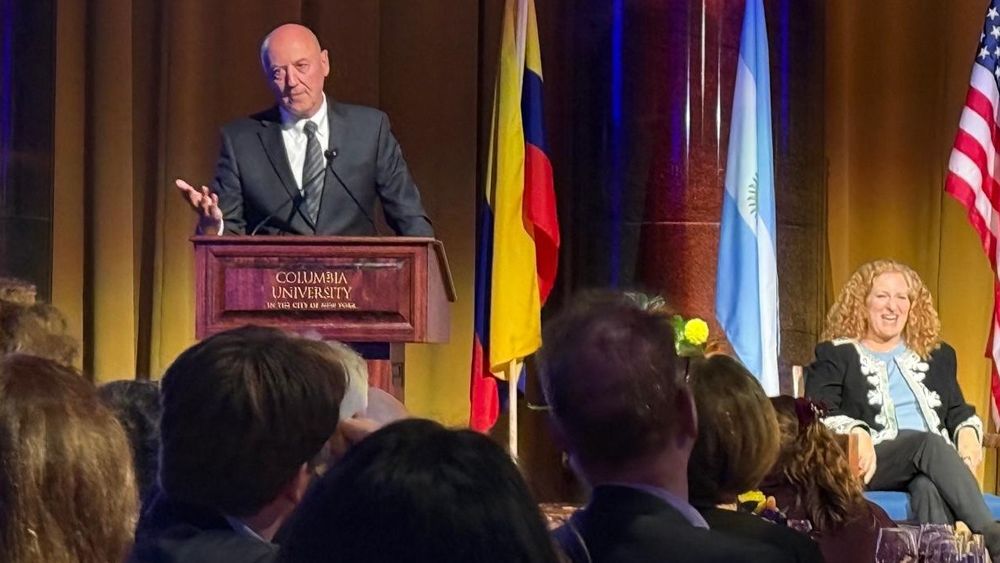
Security has become an increased concern and expense for news organizations. At a recent event in New York, A.G. Sulzberger, the publisher of the New York Times, stated: “We spend nearly ten times more today than we did a decade ago to protect the safety, security, and legal rights of our journalists.”
President Trump continues to criticize the news media publicly. In his second term as President, he has equated members of the press with terrorists, with a September statement by his Department of Homeland Security calling on “the media and the far left” to stop their “hateful rhetoric,” claiming it was inspiring political violence and increasing assaults on DHS agents.
After Charlie Kirk was assassinated, Trump condemned the rhetoric of the “radical left” and vowed to go after “those who contributed to this atrocity and to other political violence, including the organizations that fund it and support it.” He later connected those statements to the press by suggesting that the federal government might revoke the licenses of broadcast television networks that are “against” him.
Trump’s comment came a day after ABC suspended airing the ‘Jimmy Kimmel Live!’ show because of comments its host made linking the alleged killer of conservative activist Charlie Kirk to Trump’s MAGA movement. Speaking to reporters aboard Air Force One, Trump said, “I have read someplace that the networks were 97% against me, again, 97% negative, and yet I won and easily, all seven swing states. They give me only bad publicity, press. I mean, they’re getting a license. I would think maybe their license should be taken away.”
The Federal Communications Commission Chair, Brendan Carr, has launched meritless investigations and made explicit threats against media organizations, as well as implicit threats against their parent companies. These include inquiries into CBS, ABC parent company Disney, NBC parent company Comcast, public broadcasters NPR and PBS, and California television station KCBS.
In May, Trump signed an executive order aimed at slashing public subsidies to PBS and NPR and alleged “bias” in the broadcasters’ reporting. His order instructed the Corporation for Public Broadcasting and other federal agencies “to cease Federal funding for NPR and PBS” and further requires that they work to root out indirect sources of public financing for the news organizations.
Later that month, NPR and three of its local stations sued Trump, arguing that the order violated their free speech and relied on an authority that he does not have. This summer, Congress approved eliminating $1.1 billion allocated to public broadcasting.
Trump also has continued to use the courts to fight against his perceived critics in the media. In July, Paramount Global decided to pay Trump $16 million to settle a lawsuit regarding the editing of a CBS’s “60 Minutes” interview with then-Vice President Kamala Harris last October. At the time, Harris was the Democratic candidate for President. Trump’s lawyers claimed he suffered “mental anguish” following the interview and sued for $20 billion.
Paramount, which owns CBS, said the money will go to Trump’s future presidential library and to pay his legal fees. Also in July, Trump filed a $10 billion lawsuit against The Wall Street Journal and media mogul Rupert Murdoch, whose News Corp owns the paper. The move came a day after the Journal published a story reporting on his ties to financier and convicted sex offender Jeffrey Epstein. The article described a sexually suggestive letter that the newspaper says bore Trump’s name and was included in a 2003 album compiled for Epstein’s 50th birthday. In September, a Florida federal judge dismissed a $15 billion defamation lawsuit that Trump had filed against The New York Times. U.S. District Judge Steven Merryday ruled that Trump’s lawsuit was overly long and was full of “tedious and burdensome” language that had no bearing on the legal case.
Webpages from more than a dozen government sites were removed almost immediately after Trump took office, leaving journalists and the public without access to critical information on health, crime, and other topics. In February, Trump removed the Associated Press from the White House press pool. That meant AP journalists would no longer have access to the Oval Office, Air Force One, and other events not open to the whole press corps. The move was in retaliation for AP’s decision not to comply with Trump’s preference to change the Gulf of Mexico to the Gulf of America in all instances. The AP Stylebook recommends referring to the body of water by its original name, while also acknowledging the new name Trump chose. The wire service later sued Trump, and a district court sided with the AP in April, affirming on First Amendment grounds that the government cannot punish the news organization for the content of its speech. A federal appeals court in June stayed that decision, which is now on appeal.
In September, Defense Secretary Pete Hegseth introduced new rules restricting press access to the Pentagon. The policy, for the first time, defines requesting news-related information about the Department as grounds for revoking a press credential. In October, several media organizations refused to sign the document, arguing that the new policy poses a threat to press freedom by penalizing the routine gathering of information protected under the First Amendment of the Constitution, which safeguards free expression. The text requires journalists to accept new rules regarding informational access, including the possibility of being deemed security risks and losing their Pentagon credentials if they ask Defense Department employees to disclose classified—or even unclassified—information.
According to the U.S. Press Freedom Tracker, 26 incidents involving journalists being arrested or detained have been recorded in the last six months. Again, many of these arrests occurred during protests; 14 during the Los Angeles immigration protests in June. While many of these charges are eventually dropped, arrests of journalists covering protests significantly impede the work of reporters and news organizations.
Subpoenas for journalistic work product remain a concern in the United States. On April 25, Attorney General Pam Bondi issued a memorandum to all U.S. Department of Justice employees titled “Updated Policy Regarding Obtaining Information From, or Records of, Members of the News Media.” The memo outlines changes to the internal policy at the DOJ, often referred to as the “news media guidelines” and codified at 28 U.S.C., which governs the use of subpoenas, court orders, and search warrants targeting journalists or their third-party communications or other service providers.
The guidelines do not carry the force of law and are voluntarily adopted but are a crucial protection for a free press in the United States. On May 1, the Justice Department published the revised 50.10 regulation. The text of the revised regulation confirms that Bondi has rescinded the reforms implemented by former Attorney General Merrick Garland in a 2021 memo and the 2022 rewrite of the 50.10 guidelines. It includes the bright-line rule barring compulsory process against journalists acting within the “scope of newsgathering,” as defined and subject only to very narrow exceptions. It also includes one of the most essential protections in the Garland reforms, especially for national security reporting—defining “newsgathering” to include the “receipt, possession, or publication” of government information, including classified material. The regulation confirms that the guidelines have largely reverted to the version in place before the Garland revisions in 2022, which incorporates specific reforms implemented by former Attorney General Eric Holder in 2014 and 2015.
Finally, national immigration deportation activities pose risks to press freedom. In the case of Tufts University Ph.D. student Rümeysa Öztürk, who U.S. Immigration and Customs Enforcement detained, the government has claimed the unfettered power to detain non-citizens for months or years. Öztürk’s case arose after federal immigration authorities took her into custody in March. To date, the government has not provided a basis for her detention other than an op-ed she co-authored for her student newspaper about Israel’s actions in Palestine. Öztürk filed a habeas corpus petition in a federal district court challenging the constitutionality of her detention. The availability of habeas relief is an essential protection for press freedom. Still, the government has argued that federal courts don’t have the authority to consider a habeas claim until after the petitioner’s removal proceedings run an often-lengthy course in immigration court. Were the court to side with the government here, it would grant the executive branch sweeping discretion to detain non-citizen journalists in retaliation for their reporting, with no immediate recourse for a person in custody.