Miami (September 19, 2025) — The Inter American Press Association (IAPA) expressed concern over recent statements and actions by U.S. government officials suggesting that broadcast licenses could be revoked from media outlets or networks that publish or air critical commentary about the administration.
On Thursday, President Donald Trump publicly suggested that television networks or broadcasters that cover him “negatively” “their license should be taken away,” according to local press reports. “All they do is hit Trump. They’re licensed. They’re not allowed to do that. They’re an arm of the Democrat Party,” the president added.
At the same time, Federal Communications Commission (FCC) Chairman Brendan Carr stated that broadcasters with FCC licenses have “a unique obligation to operate in the public interest. And over the years, the FCC walked away from enforcing that public interest obligation. I don’t think we’re better off as a country for it,” according to press reports.
Broadcasters have already reacted. ABC suspended the late-night program Jimmy Kimmel Live! after some affiliated stations pulled it from their lineup under such pressure. Critics warned that this is self-censorship induced by regulatory threats, according to Reuters.
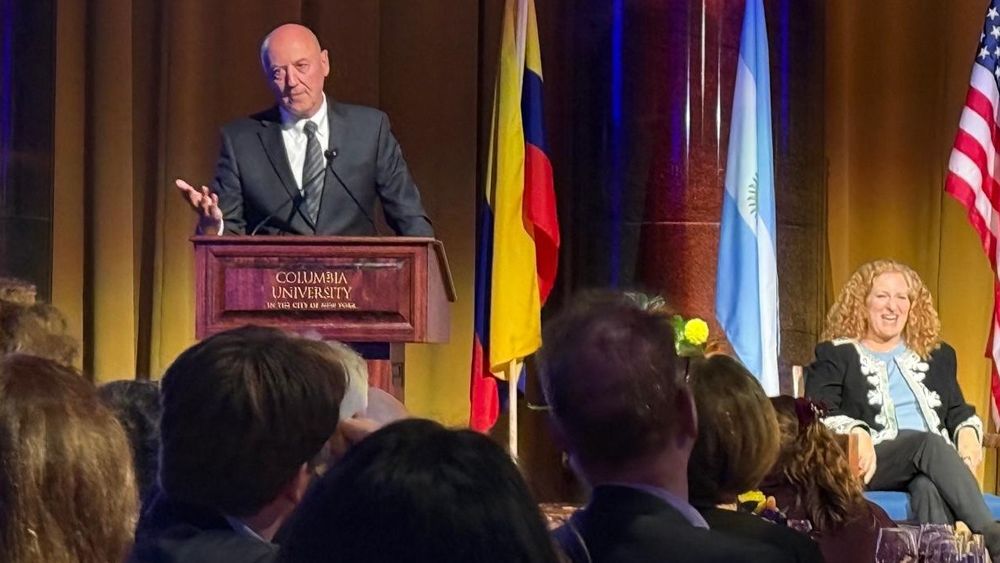
The IAPA President José Roberto Dutriz stated that “the mere suggestion that a government could take away a broadcaster’s license for critical reporting constitutes an unacceptable form of censorship. Even the threat of losing a license can lead to undue compliance, self-censorship, and a weakening of public discourse. Threatening to strip media outlets of their license for allegedly negative coverage of a president is an attack on press freedom. Journalism does not exist to flatter power, but to question it,” said Dutriz, CEO of La Prensa Gráfica in El Salvador.
Martha Ramos, chair of the IAPA’s Committee on Freedom of the Press and Information, added that “using regulatory power as a weapon against the media erodes public trust, weakens democratic institutions, and silences critical voices. Governments must understand that the free flow of information—including criticism—is not a privilege granted by the State, but a fundamental right of society. The United States, with its historic tradition of defending press freedom, should be an example, not a precedent for intimidation. The media do not need permission to criticize; that is the very essence of press freedom in a democracy,” added Ramos, editorial director of the Organización Editorial Mexicana (OEM).
The IAPA maintains that the threat of revocation or conditional renewal of broadcast licenses based on editorial content contradicts Articles 5 and 6 of the Declaration of Chapultepec, in particular Article 7: “Tariff and exchange policies, licenses for the importation of paper or news-gathering equipment, the assigning of radio and television frequencies and the granting or withdrawal of government advertising may not be used to reward or punish the media or individual journalists.”
President Trump had already taken legal action against other outlets, including CBS/Paramount and ABC/Disney, companies with which he reached multimillion-dollar out-of-court settlements. He also sued The Wall Street Journal in July, seeking about US$10 billion for defamation, and The New York Times this week for US$15 billion—lawsuits that were condemned at the time by the IAPA.
The IAPA is a non-profit organization dedicated to defending and promoting freedom of the press and expression in the Americas. It comprises more than 1,300 publications from the western hemisphere and is based in Miami, Florida, United States.