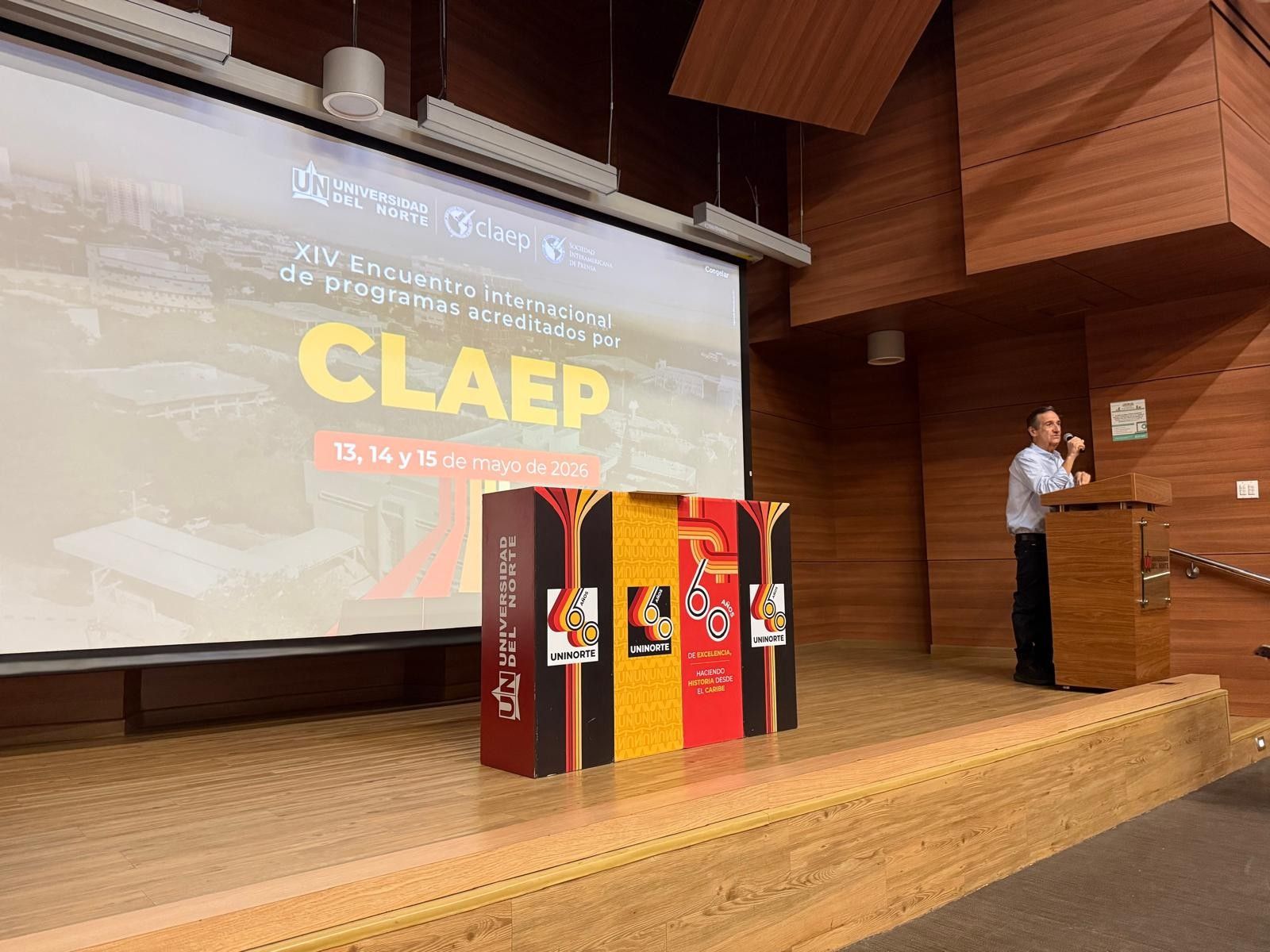
Barranquilla, Colombia (May 13, 2026) – The relationship between journalism, artificial intelligence and press freedom took center stage at the opening of the 2026 Congress of the Latin American Council for Accreditation of Journalism and Communication Education (CLAEP), a program of the Inter American Press Association (IAPA), hosted by Universidad del Norte (Uninorte) in this city.
Uninorte President Adolfo Meisel Roca opened the sessions with remarks highlighting the importance of journalism, education and critical thinking in a regional context shaped by profound technological and democratic transformations.
Nancy Gómez Arrieta, dean of the Division of Humanities and Social Sciences at Uninorte, underscored the essential role of the media in a particularly challenging environment for press freedom, further shaped by the disruption brought about by artificial intelligence.
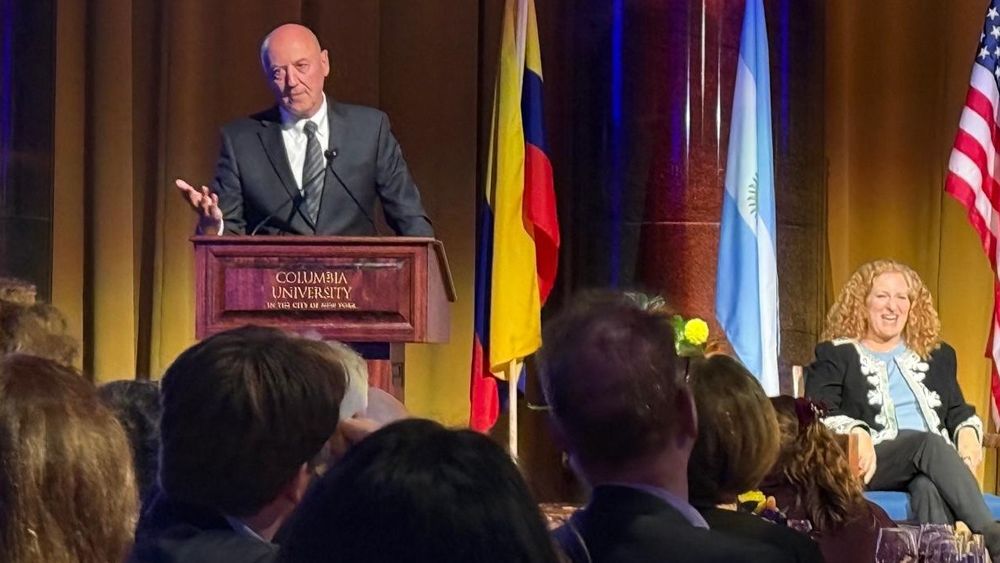
During the opening session, IAPA President Pierre Manigault, also head of Evening Post Publishing Inc. in Charleston, South Carolina, said that the discussion on artificial intelligence “is not simply about innovation, but about the future of journalism and its role in our democracies.”
Addressing academics, journalists and students, Manigault noted that artificial intelligence is already transforming the production, distribution and consumption of information, but warned that the challenges go far beyond technology. “This transformation raises fundamental questions about verification, transparency, intellectual property, bias and, above all, trust,” he said.
He also stressed that journalism schools now have a central responsibility to train professionals capable of combining technological literacy with editorial judgment, ethics and democratic responsibility. “Journalists of the future will not be defined by speed, but by their ability to verify, interpret, contextualize and build credibility,” he added.
For his part, IAPA Executive Director Carlos Lauría placed the debate on artificial intelligence within the complex landscape currently facing press freedom in the Americas.
Lauría warned about growing hostility toward independent journalism, the normalization of attacks against journalists, the economic deterioration of media outlets and the increasing concentration of the digital ecosystem. “In many places, online harassment, legal threats or surveillance against journalists are beginning to be seen as a routine part of the profession. That represents a major risk to democracy,” he said.
He also emphasized that, amid the spread of disinformation and automatically generated content, “the true distinguishing value of journalism will continue to be credibility,” adding that “the best antidote to disinformation and falsehood is quality journalism.”
Lauría noted that this year the IAPA launched a regional dialogue series on artificial intelligence and media in Latin America, aimed at bringing together editors, academics and technology experts to analyze the impact of these changes on sustainability and journalistic ethics.
For his part, Juan David Bernal, executive director of CLAEP, highlighted the role played by the network’s 22 accredited universities in strengthening journalism education grounded in quality, academic rigor, and democratic values. Bernal emphasized that, in an environment shaped by technological disruption, disinformation, and growing pressures on press freedom, universities have the responsibility to train journalists capable of practicing the profession with critical thinking and a strong commitment to public service.
The congress program includes panels and discussions on artificial intelligence in journalism, disinformation, media sustainability, newsroom digital transformation, journalism education models and challenges to democracy in Latin America. Participants include leading academics Carlos Scolari and Sebastián Valenzuela, Univision investigative journalist Gerardo Reyes, and Volcánicas magazine director and gender-focused journalism leader Catalina Ruiz-Navarro, offering diverse perspectives on the challenges facing journalism today.
As a symbolic act of commitment to freedom of expression and of the press, at the end of the first segment of the conference, Uninorte leaders, CLAEP authorities, the IAPA executive director, the director general of the Gabo Foundation Jaime Abello Banfi, and journalist Catalina Ruiz-Navarro signed the Chapultepec and Salta II Declarations—documents promoted by the IAPA that uphold fundamental principles for defending press freedom, journalistic independence and digital rights in today’s environment.
The IAPA is a non-profit organization dedicated to defending and promoting freedom of the press and expression in the Americas. It comprises more than 1,300 publications from the western hemisphere and is based in Miami, Florida, United States.