By Carlos Lauría / Executive Director of the IAPA
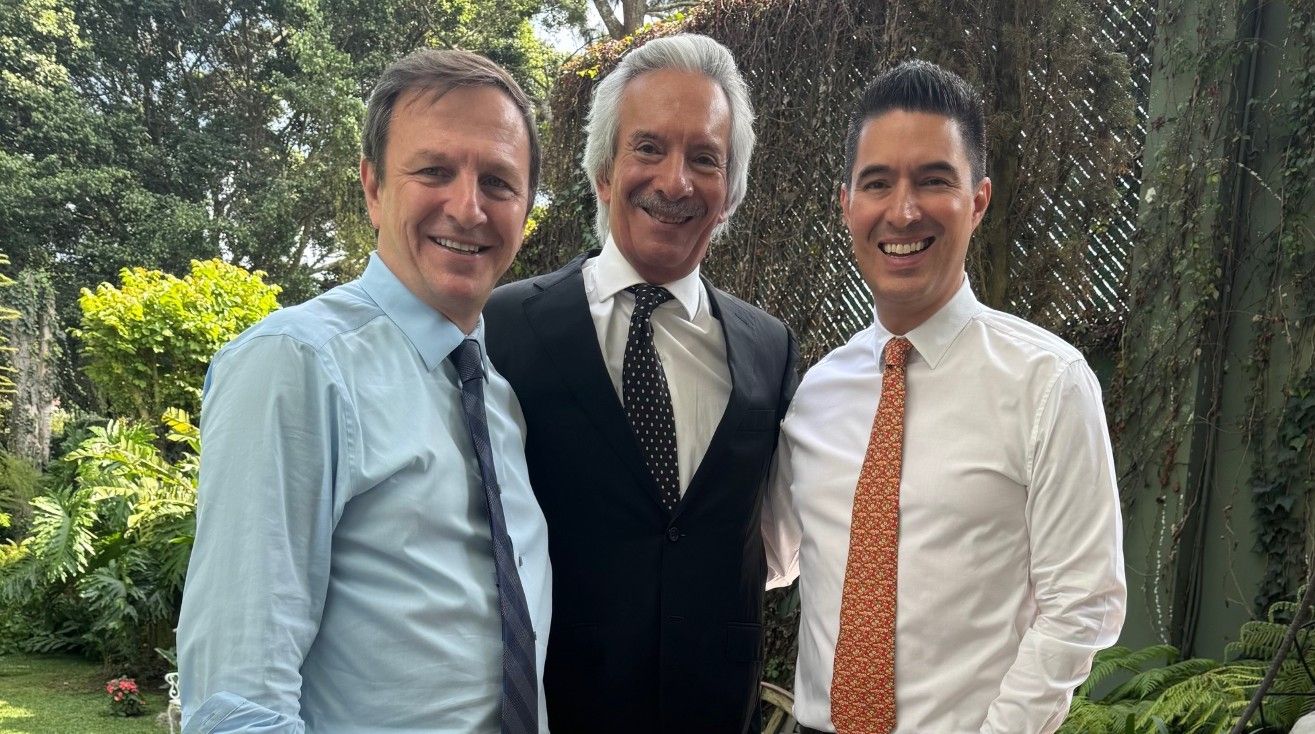
In October 2024, during a break from prison, with José Rubén Zamora, center, alongside his son José Carlos Zamora.
By Carlos Lauría / Executive Director of the IAPA
I met José Rubén Zamora more than twenty years ago, when I was responsible for the Americas program at the Committee to Protect Journalists (CPJ). He was one of the first serious cases I had to handle: the brutal attack he and his family suffered in 2003.
That episode —a commando of armed men who stormed into his home, held him at gunpoint, attacked his children, and forced him to listen as they told him he was about to be executed— has remained engraved in my memory.
A few years later, in July 2008, while I was on a work trip to Guatemala City, another piece of news shook me: José Rubén had been kidnapped and left semi-conscious in the Chimaltenango area.
I also remember the anguish of his team, the concern of his colleagues, the overwhelming sense that Guatemala might lose one of its most lucid voices. Hours later, hearing his voice —disoriented, yet steady— was an immense relief.
He told me then that he could not remember anything, that he only knew he had gone out for dinner and woke up naked and beaten in a hospital. It was one of the many attempts to silence him, to stop him from investigating corruption and organized crime. And yet he continued writing, denouncing, publishing.
He never stopped exposing the way power operated in the shadows. He was intimidated, threatened, prosecuted, and attacked because of the stories he published.
A system of judicial persecution of critics and opponents —orchestrated by the Attorney General’s Office under the government of Alejandro Giammattei— wove a dark judicial plot against him. And for more than three years, José Rubén has been in prison. He was arrested in 2022 during a raid with no clear grounds; in less than 72 hours, authorities fabricated charges of money laundering, extortion, and influence peddling.
His first hearing was not held within the legal timeframe, and everything surrounding his case since then has been an example of institutional bad faith: three fabricated criminal proceedings, systematic violations of due process, and a judiciary determined to send an unmistakable message: in Guatemala, critical journalism is punished.
The domino effect was devastating: the closure of elPeriódico, the judicial harassment of its newsroom, the forced exile of his family, the constant threat against anyone associated with his work. There is no name for this other than political persecution.
We visited him in prison with a joint IAPA-CPJ mission in January 2024 and then again in October of that year, when I was glad to see him after he had regained his freedom temporarily. That visit also included a meeting with President Bernardo Arévalo. The deep flaws of a clearly irregular judicial process sent him back to prison again in March. And there he remains, with constant delays in his hearings and ongoing obstacles aimed at keeping him behind bars.
This past Friday, I visited him in prison with his son José. I expected to find him discouraged or worn down by isolation. That was not the case. He received us calm, lucid, even with an energy that surprised me. His physical appearance cannot hide what he has endured: during the first months of captivity, he was subjected to physical and psychological torture, extreme detention conditions, and daily humiliation. They could have destroyed him. But they could not break his unwavering resolve.
We talked for hours. I listened as he recounted the details of his imprisonment: the cells, the sleepless nights, the unbearable weight of knowing he could die there. But I also heard him speak about his family with immense compassion, about his faith in international justice, about his unyielding determination, about his certainty that what he did was right.
I admire his fortitude in the face of such staggering injustice. Perhaps it is the conviction of someone who understands that truth is not a profession but a moral duty. Or the need to continue being a reference point for an entire generation of journalists who grew up learning from him. Or maybe it is simply an act of intimate resistance —the purest way of saying that although he has been stripped of his freedom, they have not managed to break him.
As I left the prison, I thought of that younger activist from twenty years ago, confronted for the first time with the brutality directed at a journalist in Central America. And I thought about everything that has changed since then —for him, for Guatemala, for journalism— and about what has not changed: José Rubén’s courage.
His resilience, in the midst of injustice, is a reminder that even in the most adverse contexts, a man can choose not to give up and can choose to remain free.
His story deserves to be told with respect, but also with indignation. And because I trust —I truly believe— that the day will come when we can embrace him outside that cell.
Until then, our duty is clear: to continue demanding his release, to denounce every abuse, and to refuse to let silence become an accomplice.
José Rubén Zamora is an unjustly imprisoned man. But he is not defeated. And as long as he still has a voice, even from behind bars, Guatemala will continue to have a possibility for redemption.