On November 20, Robinson del Pezo, journalist and founder of the platform La Voz del Pueblo vuelve por ti mi provincia, was also murdered. The page reported on alleged conflicts of interest involving municipal and provincial authorities and other matters of community oversight. Del Pezo was killed inside his butcher shop in the canton of La Libertad, in Santa Elena province.
Restrictions on news coverage were also documented during the Popular Consultation and Referendum held on November 16. Journalists accredited by the National Electoral Council (CNE) reported obstacles in Machala, Loja, and Quevedo, where members of the police and the military prevented recordings inside polling stations, expelled reporters, and limited news coverage.
On December 9, journalists from TC Televisión and Ecuavisa were physically attacked by security guards from the private company PROTEMAX while covering a fire at the Guayaquil Bus Terminal. Several cameramen were injured during the incident. Police intervention led to the arrest of several attackers, and the mayor of Guayaquil, Aquiles Álvarez, later ordered the termination of the municipality’s contract with the company.
In February 2026, several journalists were prevented from entering a Carnival press conference organized by the Governor’s Office of El Oro due to police and military controls that reporters described as arbitrary.
During the same period, limitations on access to public information and official sources were also recorded.
Journalist Galo Arellano, correspondent for Canela News in Miami, reported that he had been removed from the official international press chat managed by the Secretariat of Communication (SECOM) after asking critical questions of the government. He also reported that additional requirements were imposed on him to attend official press conferences.
On November 6, Alcibiades Onofre, Teleamazonas correspondent in the United States, was prevented from entering a public event held by President Daniel Noboa in New York despite having proper accreditation.
Similarly, journalist Paul Romero, from Ecuavisa, reported in February that he had been excluded from official coverage organized by the Ministry of Defense and the Armed Forces after publishing investigations concerning multimilliondollar radar contracts and Army infrastructure projects.
The situation became widely known following a journalistic investigation revealing internal guidelines issued by the Joint Command of Ecuador’s Armed Forces regarding the accreditation of media outlets and journalists for institutional events. According to the document, media organizations could be evaluated based on their editorial line and classified as “friendly,” “neutral,” or “critical,” with scores and internal records that might influence their access to information and official activities. The measure raised serious concerns among press freedom organizations.
In January, the temporary shutdown of the government portal datosabiertos.gob.ec restricted access to public data from various state institutions. The interruption affected transparency and accountability and limited journalists’ and citizens’ access to relevant information necessary for investigative and oversight work.
Journalists also reported restrictions imposed by the Ministry of Health on coverage related to tuberculosis, as well as difficulties accessing hospital information in the city of Cuenca.
During the same period, several legal actions were filed against journalists, analysts, and organizations linked to journalistic activity.
On November 18, Judge Ximena Rodríguez Párraga ordered the location and arrest of journalist Christian Zurita for alleged “disrepute” in a case related to investigations involving contracts connected to the business family Topic. The case is linked to complaints made by Zurita regarding alleged irregularities during the 2023 electoral campaign.
Businessman Pedro Julio Bejarano also filed a habeas data action against the organization Fundamedios seeking the removal of previous alerts containing information about him. The case was ultimately dismissed on January 30 by Judge María Soledad Moreno García.
In January, journalist Catrina Tala reported unjustified raids on her audiovisual production company following accusations made by the president of the Council of the Judiciary, Mario Godoy. Tala interpreted the operations as political retaliation and described them as an intimidating action affecting her work, her team, and her family.
In February, political analyst Gabriela Panchana was criminally charged with alleged tax fraud after publishing critical comments on social media. Observers interpreted the case as an attempt to criminalize critical speech. The complaint requested a search of Panchana’s home and the seizure of computer equipment. Panchana rejected the accusations, stated that she had complied with her tax obligations, and argued that her critical commentary was being judicialized.
Digital harassment and stigmatization campaigns against journalists also remained a significant trend.
On October 23, journalist Yalilé Loaiza, editor of Ecuador Chequea and correspondent for Infobae, received a wave of misogynistic attacks on social media after commenting on a case of police violence. More than forty messages contained insults, professional disqualifications, and symbolic violence questioning her credibility and targeting her because she is a woman.
Journalist Blanca Moncada, from the outlet La Defensa, was similarly targeted by digital smear campaigns in January after publishing information regarding government advertising spending and alleged nepotism within the executive branch.
Communicator Gabriela Panchana also faced coordinated defamation campaigns and the publication of personal information by anonymous accounts and digital outlets aligned with the government.
On December 16, journalist Segundo Cabrera, director of Periodismo Sin Mordaza, reported receiving threats and intimidating messages after publishing critical information about the municipality of Cuenca. Some of the messages included references to his family and videos discrediting other communicators as a warning. He was also subjected to insults and credibility attacks on social media.
Economic and administrative pressures affecting editorial independence were also documented.
On November 28, sports journalist Eduardo Andino resigned from Radio Redonda and Radio Canela after denouncing pressure linked to advertising from a betting company related to his news coverage. His reporting on the murder of soccer player Jonathan González and alleged irregularities in sports betting generated conflicts with media management and led to a onemonth suspension, salary reductions, and irregular working conditions. Andino reported censorship, threats, and manipulation of information driven by commercial interests.
On October 22, the telecommunications regulator ARCOTEL notified the suspension of transmissions of the Indigenous community radio stations Radio Ilumán and Radio Inti Pacha. The suspension of Radio Ilumán was revoked hours later, while Radio Inti Pacha remained off the air for fifteen days. Sanctions against Indigenous media raise concerns regarding freedom of expression, intercultural communication, and media pluralism.
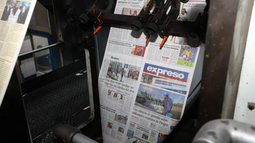
On February 18, the Superintendency of Companies announced the administrative intervention of GRÁFICOS NACIONALES S.A. (GRANASA), publisher of the newspapers Expreso and Extra, in order to supervise its financial situation and address alleged irregularities. The measure followed the company’s refusal to provide information requested by the state entity Inmobiliar, which claims ownership of 2.56 percent of the company’s shares under judicial dispute. GRANASA denounced the action as harassment by the government of President Daniel Noboa and stated that the intervention would not affect the editorial independence of its outlets.
Local journalists also continued to face serious risks, including threats and intimidation.
On January 6, journalist Juan Alcívar, correspondent for Fundamedios and JAR TV, reported being harassed by an education official in La Concordia while investigating labor complaints. According to Alcívar, the official insulted and intimidated him, followed his vehicle, and blocked his path.
In January, journalist Ronald Ronquillo sought police protection after receiving death threats and experiencing persistent telephone and digital harassment following an investigation into alleged irregularities in the sale of municipal land in La Libertad.
On January 15, journalist Fernando Muñoz, from Radio Salinas, reported being intimidated at his home by two individuals attempting to prevent an interview with activist Monika Silva about alleged irregularities in the sale of municipal land in Santa Elena. For security reasons, the interview was ultimately canceled.
On February 7, journalist Jonathan David Quezada Castillo reported threats and physical assaults in Guaranda while covering local festivities.
On January 25, the outlet LlamingoEC received threats attributed to members of the armed group Oliver Sinisterra, a dissident faction of the FARC, after publishing investigations on border security issues.
Other relevant incidents were also documented during the period.
On November 7, Anderson Boscán, commentator for the digital outlet La Posta, released an audio recording attributed to a witness who accused journalist Christian Zurita of direct responsibility for the 2023 assassination of journalist and presidential candidate Fernando Villavicencio. Zurita rejected the accusations and denounced a coordinated digital campaign against him. The Attorney General’s Office later stated that the recording had been edited and that its dissemination was illegal.
On December 18, the municipality of Tulcán publicly discredited the local outlet La Prensa after it published a citizen complaint regarding the deteriorated condition of a public works project. Municipal authorities labeled the information “false” using partial photographs, while the outlet documented the situation with testimonies and video evidence.
On December 24, journalist Andrés López experienced the blocking on Facebook of a segment of his program addressing the controversial sale of ninetythree municipal hectares in La Libertad, despite the material being original content. The video was removed due to a copyright complaint and later restored.
On January 4, the National Police arrested in Guayaquil Dixon Jony B. C., the alleged perpetrator in the killing of journalist Xavier Ramos, which occurred on August 21, 2025. Prosecutors reported that pretrial detention was ordered on charges of robbery resulting in death. Ramos, a contributor to El Universo, had been found dead in his home with stab wounds.
On January 19, the mayor of Cuenca, Cristian Zamora, publicly attacked the podcast Moteradio on the social media platform X, discrediting its reporting on a municipal employee who suffered a miscarriage following a workplace incident. The mayor accused the outlet of publishing biased information and suggested economic motivations without presenting evidence. Moteradio stated that it had verified the information with medical documentation and testimonies.
On January 22, the Presidency confirmed that the open data portal had been migrated after remaining unavailable since January 12. The lack of prior communication caused confusion and affected access to key information required by journalists and citizens for oversight, investigation, and monitoring of public security.
Also on January 22, editor Yalilé Loaiza and journalist Esteban Cárdenas reported being harassed by an official from the Ministry of the Interior while verifying statements attributed to Minister John Reimberg. The interaction included disqualifications, refusal to provide information, and a veiled warning that the journalists would be “kept on record.”
On January 23, journalist Tamia Villavicencio received legal threats after publishing a report about a business operating without environmental permits in Ayampe, in the province of Manabí.
On January 26, Fundamedios reported procedural irregularities in the habeas data hearing filed by businessman Pedro Bejarano. Four days later, Judge María Soledad Moreno García declared the action inadmissible.
Finally, on February 6, the acting mayor of Pujilí issued stigmatizing statements and threatened legal action against journalists who had published critical coverage of the local administration.