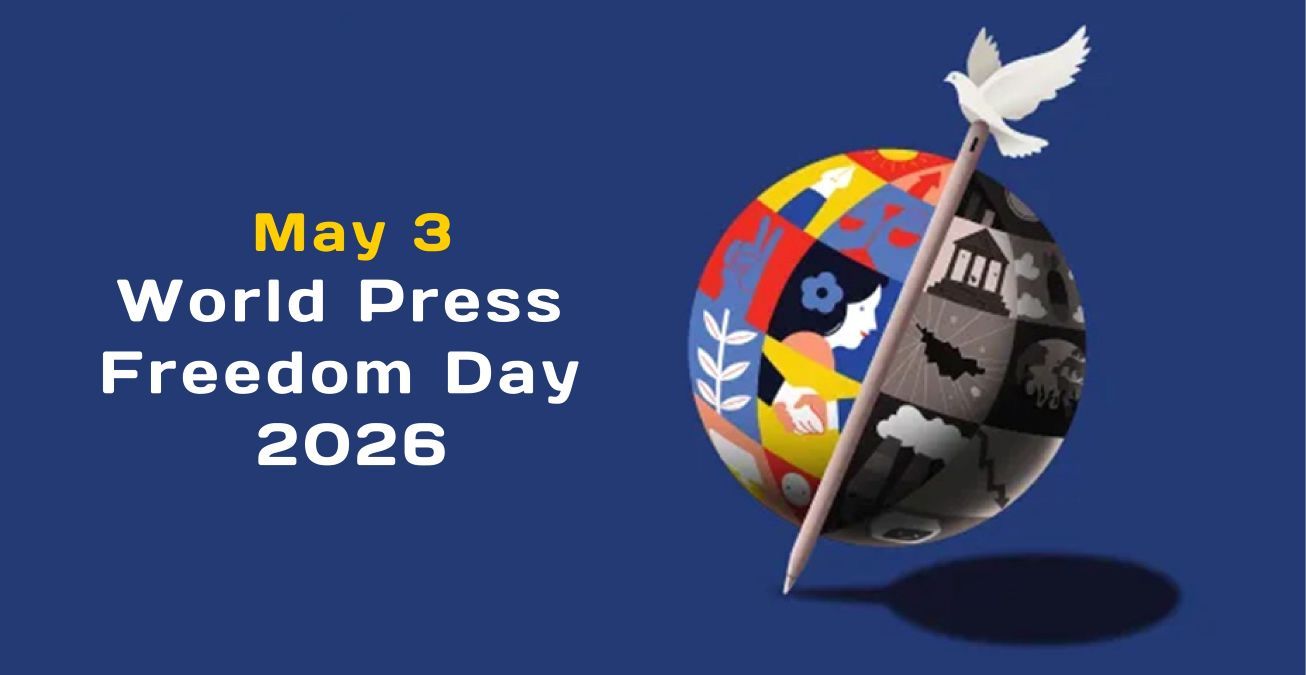
Miami (May 1, 2026) — On the eve of World Press Freedom Day*, observed on May 3, the situation in the Americas calls for deep—and above all, urgent—reflection. Freedom of expression—an essential pillar of any democracy—is facing sustained deterioration that is no longer reflected only in isolated incidents, but in a troubling normalization of hostility toward the press.
Recent messages from the president of the Inter American Press Association (IAPA), Pierre Manigault; the chair of the Committee on Freedom of the Press and Information, Martha Ramos; and the conclusions presented by First Vice President Carlos Jornet converge on the same warning: the hemisphere is going through a critical phase in which the practice of journalism is besieged on multiple fronts—from political power and criminal structures to increasing judicial harassment, as well as digital dynamics that amplify disinformation and discredit.
Today, violence against journalists not only persists, but it is also diversifying. In addition to killings, threats, and physical attacks, more sophisticated mechanisms—often equally effective at silencing—have emerged: stigmatization campaigns, legal harassment, the arbitrary use of criminal law, and economic pressures that suffocate media sustainability. This convergence of factors creates a hostile ecosystem in which reporting increasingly entails extraordinary risks.
One of the most troubling aspects highlighted by the IAPA is precisely this “normalization” of aggression. What once sparked widespread condemnation now, too often, goes unnoticed or is minimized. This cultural shift erodes the very foundations of democratic coexistence by weakening society’s ability to recognize and reject abuse against the press.
In this context, authoritarian narratives are gaining renewed strength. Governments across the ideological spectrum resort to similar strategies: discrediting independent media, eroding public trust in journalism, and concentrating control over information. The result is a gradual closing of civic space, where criticism is punished and transparency becomes the exception.
As the IAPA president noted, it is necessary to recognize an unprecedented reality: the United States is now facing systemic pressures on press freedom that reflect patterns historically observed in other parts of the continent. The escalation of hostile rhetoric, the use of legal and regulatory tools, restrictions on access, and the rise in incidents of violence against journalists mark a turning point that cannot be ignored.
This has profound implications for the entire hemisphere. When press freedom weakens in the United States, it sends a signal that may be interpreted by other governments as validation to replicate restrictive practices. But it also creates an opportunity: the experience, resilience, and lessons learned by journalists in Latin America can now serve as a reference, support, and guide in a context that demands greater regional cooperation.
We are also facing increasing restrictions on access to public information. Governments that limit data, manipulate transparency systems, restrict accreditation, or condition access to official sources not only undermine journalistic work but also violate the fundamental right of citizens to be informed. In some cases, these practices translate into concrete decisions that restrict journalists’ access to government facilities or official press conferences, directly affecting news coverage.
However, the diagnosis is not limited to denunciation. The IAPA’s conclusions also underscore the need for a coordinated and decisive response. Defending press freedom today requires strengthening protection mechanisms for journalists, combating impunity for crimes against them, and promoting regulatory frameworks that ensure a more transparent and equitable digital environment. It also means reaffirming the value of public-interest journalism, which is essential for accountability and civic participation.
In this context, the IAPA reaffirms the importance of advocacy as a tool for change. Its missions, dialogue with authorities, and promotion of international standards remain essential mechanisms to generate concrete commitments and foster accountability.
Nevertheless, if there is one challenge that demands priority attention, it is impunity. Most crimes against journalists in the Americas remain unsolved. This reality constitutes a structural failure that weakens the rule of law and puts freedom of expression at risk.
For this reason, the IAPA will intensify its efforts to combat impunity through investigative mechanisms, legal support, and international visibility. Reviving initiatives aimed at clarifying emblematic cases and supporting victims and their families is a necessary step toward justice. Impunity is not inevitable: it is the result of inaction. And it can be reversed through commitment, coordination, and sustained pressure.
The challenge is collective. It does not rest solely with media outlets or journalists, but with society. Because when press freedom is weakened, what is at stake is not only the right to report, but everyone’s right to be informed.
On this World Press Freedom Day, the IAPA calls for a renewed commitment to these fundamental principles. It is not only about resisting threats, but about rebuilding the conditions that allow journalism to fulfill its role without fear or undue restrictions.
At a time when truth is contested and silence is imposed through various means, reporting remains—more than ever—an act of courage. And defending that right is an urgent responsibility.
*World Press Freedom Day is observed every May 3 in commemoration of the Windhoek Declaration, adopted in 1991 during a meeting of African journalists promoted by UNESCO. This document established fundamental principles for the defense of press freedom. Three decades later, in 2021, the Windhoek +30 Declaration was adopted, updating this framework considering the challenges posed by digital transformation and the growing power of major technology platforms over freedom of expression.
The IAPA is a non-profit organization dedicated to defending and promoting freedom of the press and expression in the Americas. It comprises more than 1,300 publications from the western hemisphere and is based in Miami, Florida, United States.