Miami (April 29, 2026) – The Inter American Press Association (IAPA) expresses its deep concern over recent actions and statements by regulatory authorities in the United States that could lead to the review or possible revocation of television broadcast licenses, in a context that various sectors interpret as retaliation for critical editorial content.
The Federal Communications Commission (FCC) has ordered an early review of the licenses of several television stations affiliated with the ABC network, owned by Disney, even though those licenses were not due for renewal until the end of the decade, according to multiple press reports.
The decision comes amid escalating tensions between federal authorities and the network, following criticism directed at a satirical program hosted by comedian Jimmy Kimmel. Various reports indicate that the President of the United States had publicly called for the host’s removal, which was followed by the initiation of the regulatory process.
Although the FCC has stated that the review falls within the scope of compliance evaluations, including aspects related to corporate policies, the political context in which it occurs has raised serious concerns. Experts and organizations have warned that the measure could be interpreted as a form of indirect pressure on editorial content, especially considering that the revocation of television licenses is extremely rare in the United States.
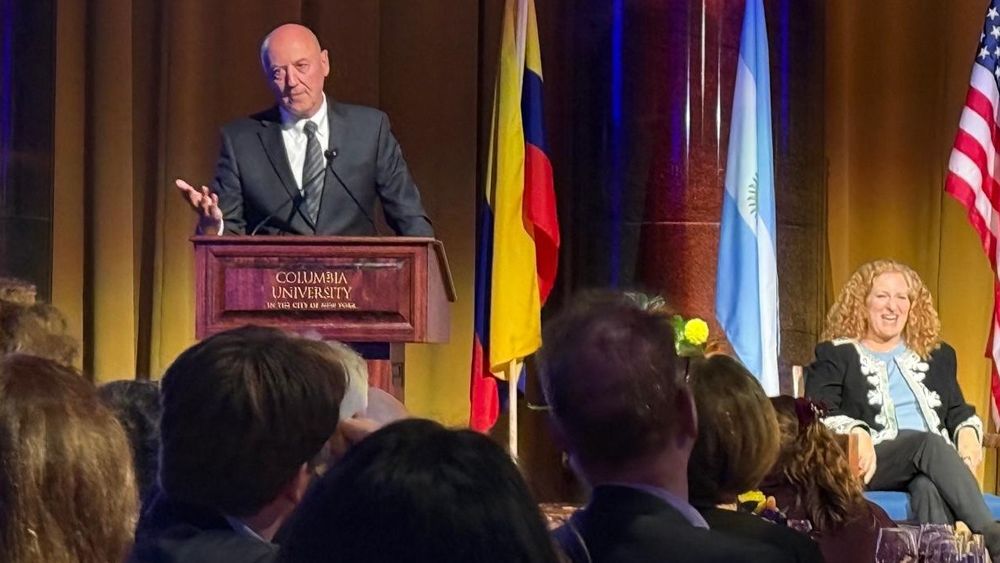
IAPA President Pierre Manigault stated that “broadcast licenses cannot become instruments of political retaliation. Any attempt to use regulatory mechanisms to punish critical or satirical content erodes fundamental principles of freedom of expression and weakens the democratic system,” said Manigault, president of Evening Post Publishing Inc., based in Charleston, South Carolina.
For her part, Martha Ramos, president of the IAPA’s Committee on Freedom of the Press and Information, said that “when authorities suggest that a media outlet’s ability to remain on the air may depend on its editorial line, a dangerous line is crossed. Media independence and protection from political pressure are essential conditions for the practice of journalism,” said Ramos, editorial director of Organización Editorial Mexicana (OEM).
International bodies have established that broadcasting regulatory frameworks must be applied in an objective, transparent, and non-discriminatory manner, and never as retaliation for media content or opinion. Freedom of expression protected by the First Amendment in the United States includes political satire, a traditional form of holding power accountable in democratic societies.
Last September, the IAPA warned that even the mere suggestion of revoking a broadcaster’s license for engaging in critical journalism constitutes an unacceptable form of censorship. This practice not only contradicts the principles enshrined in the Declaration of Chapultepec, but also directly violates its Articles 5 and 6, and particularly Article 7, which states: “Tariff and exchange policies, licenses for the importation of paper or news-gathering equipment, the assigning of radio and television frequencies and the granting or withdrawal of government advertising may not be used to reward or punish the media or individual journalists.”
The report on press freedom in the United States, approved at the IAPA’s most recent midyear meeting, also warned that the FCC “continues to threaten actions that would expand its discretionary ability to silence speech on public airwaves it doesn’t like.”
The IAPA is a non-profit organization dedicated to defending and promoting freedom of the press and expression in the Americas. It comprises more than 1,300 publications from the western hemisphere and is based in Miami, Florida, United States.