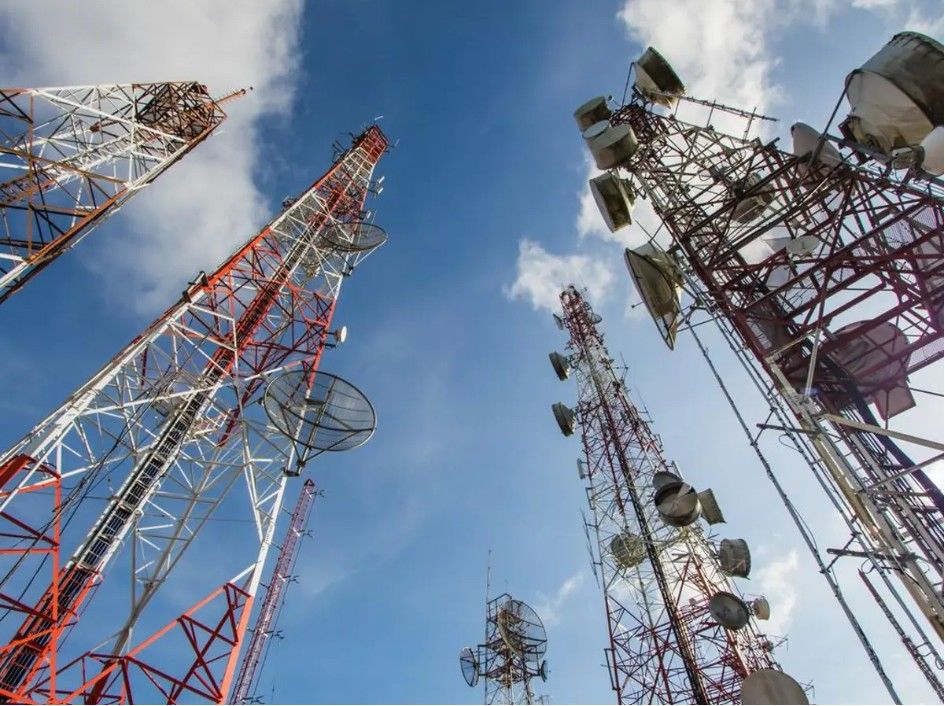
Miami (December 2, 2025) – The Inter American Press Association (IAPA) expresses its concern over the process to auction radio and television frequencies promoted by the Government of Costa Rica, considering that the proposed mechanism poses a direct risk to pluralism, diversity, and the right to freedom of expression in the country.
Under the stated purpose of “democratizing” the use of state resources and ensuring that companies pay “what is fair” for their business, President Rodrigo Chaves’ administration announced weeks ago an auction of radio and television frequencies, according to press reports.
After the deadline set by authorities for the bidding process closed on November 21, dozens of broadcasters reported that they were unable to submit a bid. According to those affected—along with professional associations, experts, opposition parties, and organizations including the Catholic Church—the consequences will deal a blow to freedom of expression and democratic plurality, according to the reports.
Last week, however, the Constitutional Chamber ordered, as a precautionary measure, the immediate suspension of the radio and television frequency auction convened by the Superintendency of Telecommunications (Sutel), while an appeal filed against the process is resolved, CRHoy reported.
International standards and jurisprudence within the inter-American system establish that procedures for allocating the radio spectrum cannot rely solely on technical, economic, or fiscal criteria, as this would be incompatible with the American Convention on Human Rights and the Declaration of Principles on Freedom of Expression.
Likewise, Article 7 of the IAPA’s Declaration of Chapultepec states that “tariff and exchange policies, licenses for the importation of paper or news-gathering equipment, the assigning of radio and television frequencies and the granting or withdrawal of government advertising may not be used to reward or punish the media or individual journalists.”
Comparative experience in the inter-American system has shown that concession models that exclude sectors for economic reasons or favor concentrated ownership can seriously undermine citizens’ right to receive plural, diverse, and high-quality information.
IAPA President Pierre Manigault, who chairs the Evening Post Publishing Inc. group in Charleston, South Carolina, stated that “the radio spectrum is not a commercial asset subject to the logic of the highest bid; it is a public resource essential to democracy. Any mechanism that excludes media outlets for economic reasons undermines plurality and weakens the information ecosystem.”
For her part, Martha Ramos, chair of the IAPA’s Committee on Freedom of the Press and Information and editorial director of Organización Editorial Mexicana (OEM), emphasized that “inter-American standards are clear: concessions must promote diversity, not exclude it. When the cost of participating in an auction forces broadcasters out, freedom of expression is compromised. Democracy needs all voices.”
The College of Journalists and Professionals in Collective Communication Sciences of Costa Rica (Colper) warned that the process lacks an integral, public-interest-centered vision and that the fiscal emphasis adopted by the Executive does not guarantee the protection of citizens’ rights to receive diverse, educational, cultural, and regional content.
Adding to these concerns, the Institute of Press and Freedom of Expression (IPLEX) issued an alert. Its president, Raúl Silesky, noted that the high costs set by the government are causing numerous AM and FM radio stations and television channels—some with more than 60 years of history—to announce that they will go off the air because they cannot meet the auction’s requirements.
Silesky stated that “the conditions under which the auction was launched are prohibitive for many of them; many broadcasters have already said they will not participate because they lack the necessary resources, and the most regrettable part is that this reduces the number of voices in Costa Rica.”
Although Costa Rica has historically been a benchmark in respect for freedom of expression, an international IAPA mission last January verified a climate of worsening press freedom. The restrictions stem from the Executive Branch’s tendency to stigmatize and attempt to intimidate critical journalism, creating a tense environment that affects the work of media outlets and fosters fear and self-censorship.
The IAPA is a non-profit organization dedicated to defending and promoting freedom of the press and expression in the Americas. It comprises more than 1,300 publications from the western hemisphere and is based in Miami, Florida, United States.