By Julieta Long
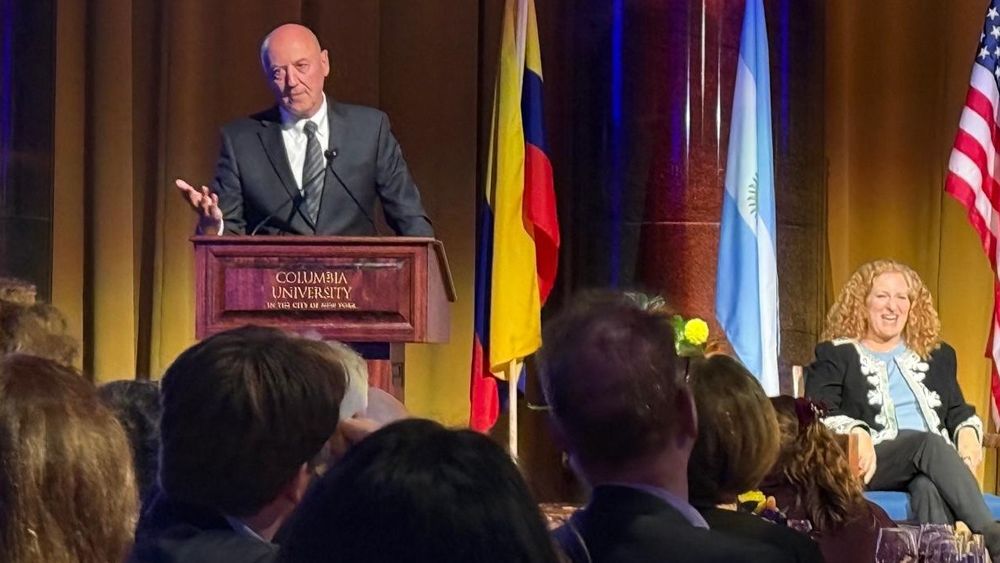
Special Rapporteur Pedro Vaca, speaking at the IAPA’s semi-annual meeting, explained that there is a “narrowing of concepts,” in which “freedom is promoted through the lens of one’s own freedom and to the detriment of others’ freedom.”

By Julieta Long
During the IAPA’s Mid-Year Meeting, Pedro Vaca, the OAS Special Rapporteur for Freedom of Expression, took stock of his tenure and analyzed the state of press freedom in the region alongside Carlos Jornet, the IAPA’s first vice president, and Martha Ramos, chair of the organization’s Committee on Freedom of the Press and Information.
The OAS Special Rapporteur for Freedom of Expression (RELE) was created in 1997 in response to the need to protect this right in the Americas.
What in the 2000s was emerging as a “democratic renaissance” due to the decline of dictatorships and a resurgence of freedom of expression now faces a reality that the key figures describe as a “spectacular collapse of that house of cards.” “I believe the region’s fragility is more evident and much more explicit,” Vaca stated.
This fragility manifests itself in a “tolerance” toward authoritarian attitudes that have once again normalized the imprisonment of journalists—a situation that contradicts inter-American standards, which question the use of criminal law to restrict expression on matters of public interest
A landscape overshadowed by authoritarianism
The landscape of recent years is described as “gloomy.” “Consolidated authoritarian regimes have not diminished; that is, there are no signs of improvement in countries like Nicaragua, Cuba, or Venezuela regarding safeguards,” Vaca commented. Likewise, the expert expressed concern over the normalization of institutional deterioration, which exposes the press to extreme levels of vulnerability, as seen in Haiti.
Vaca warned of the creation of a hostile environment fueled by political power: “There are levels of permissiveness, incitement, deliberate inflaming of public debate, tolerance of propaganda, and stigmatization of journalists and media outlets. This is a very dangerous mix.”
The “Irony” of Freedom and Control of the Narrative
One of the most critical points discussed was the semantic use of the concept of “freedom” by new leaders. The Rapporteur explained that there is a “strangulation of concepts,” in which “freedom is promoted through the lens of one’s own freedom and to the detriment of others’ freedom. It is almost a license to impose muzzles and shackles.”
For his part, Carlos Jornet noted that since 2020, a process of confrontation against journalism has accelerated, exacerbated by the pandemic, with autocratic governments taking advantage of the situation to control journalistic dissent. “The task before us from here on out is to try to put a stop to this problem and truly begin to restore journalism’s credibility as well,” Jornet stated.
Faced with this scenario, experts agree that the future of democracy in the region is closely linked to coordination between civil society and international organizations. As the IAPA’s first vice president noted, the work ahead is “to join forces, seek alliances, and find funding mechanisms that allow these types of networks to survive, because only by working together will we be able to help ensure that democracy continues to exist on the continent.”