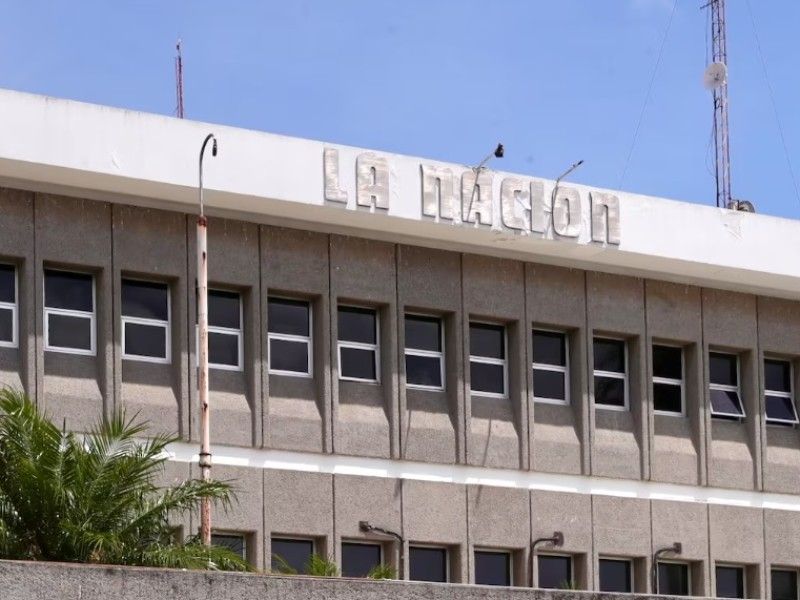
Miami (May 4, 2026) – The Inter American Press Association (IAPA) expresses its concern over the revocation of visas by the United States government for members of the Board of Directors of Grupo Nación of Costa Rica, the publishing company of the newspaper La Nación and other newspapers and magazines.
This is an unprecedented measure that, so far, has not been accompanied by a clear explanation of its grounds, as confirmed last Saturday by La Nación.
“We fully recognize that the United States, like any sovereign state, has the authority to determine the terms of entry into its territory, and we respect its ability to make decisions on immigration matters in accordance with its laws and policies,” the Costa Rican outlet said in a statement. “However, it is unprecedented in Costa Rica’s recent history for visas to be revoked from members of the board of directors of a general-interest, independent newspaper,” La Nación added.
The IAPA believes that decisions of this nature, involving executives of an independent and leading media outlet, should be governed by principles of transparency and accountability.
According to information published by various media outlets, including La Nación, these revocations are part of a broader list of visa cancellations affecting magistrates, former lawmakers, former president and Nobel Peace Prize laureate Óscar Arias, and other figures from Costa Rica’s political and institutional spheres, in what has been described as an escalation of diplomatic pressure.
In this context, the inclusion of executives from a media group is particularly sensitive and warrants a detailed explanation.
In recent years, the IAPA has documented a significant deterioration in conditions for the exercise of press freedom in Costa Rica during the administration of outgoing President Rodrigo Chaves, characterized by stigmatizing rhetoric toward media and journalists, as well as an adverse climate for plural public debate.
In this context, it is especially concerning that measures of this kind affect a journalistic institution such as La Nación, which in its nearly 80-year history has been a pillar of independent journalism and a benchmark in the defense of freedom of expression in the region.
“The use of administrative tools without clear explanations, in cases involving media outlets, generates concern and may have a chilling effect on the practice of journalism,” said Pierre Manigault, president of the IAPA and head of Evening Post Publishing Inc., based in Charleston, South Carolina, United States.
For her part, Martha Ramos, chair of the IAPA’s Committee on Freedom of the Press and Information and editorial director of Organización Editorial Mexicana (OEM), stated: “Transparency is an essential principle in consolidated democracies. It is fundamental that the criteria underpinning decisions that impact key actors in the information ecosystem be explained.”
The IAPA calls on the relevant authorities to provide clear and timely information on the reasons for this decision, in keeping with democratic principles and respect for press freedom.
According to La Nación, the U.S. Embassy in Costa Rica stated that the government’s policy is not to comment on individual visa cases.
The newspaper, which published the story on its Sunday front page, noted that “it is striking that the initial disclosure of these events occurred through channels other than any official notification to those affected.” The IAPA has learned that the news first appeared in three media outlets aligned with the government of President Chaves.
The IAPA is a non-profit organization dedicated to defending and promoting freedom of the press and expression in the Americas. It comprises more than 1,300 publications from the western hemisphere and is based in Miami, Florida, United States.