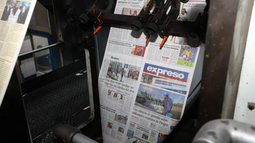
Miami (January 5, 2026) – The Inter American Press Association (IAPA) expressed concern over a series of actions by various entities, including a government body in Ecuador, that could constitute indirect reprisals against Gráficos Nacionales S.A. (GRANASA), the publishing company of the newspapers Expreso and Extra.
According to publicly available information released by the company and a formal communication submitted by its legal counsel, a number of tax, financial, and corporate actions—one of them promoted by a state-dependent entity—could be used to pressure or condition the ownership and management of the publishing group, directly affecting its freedom as a business and indirectly its editorial independence.
In particular, the IAPA observed with alarm attempts by the Superintendence of Companies, Securities and Insurance (SCVS) to reverse GRANASA’s shareholding structure, despite the fact that such was completed, registered, and perfected in accordance with existing legislation several years ago, according to the company. Such measures generate legal uncertainty and open the door to undue interference in the corporate structure of a media outlet, which is incompatible with inter-American standards on freedom of expression.
In a public statement, GRANASA accused the government of President Daniel Noboa of using “all efforts and opaque paths” to attempt to pressure the company in order to silence its criticism. According to the statement, in September 2025 the company became aware of tax proceedings initiated by the Internal Revenue Service (SRI) related to alleged discrepancies in tax filings by third parties linked to its distribution chain. The company timely requested access to the relevant documentation, but to date has not received all the requested information.
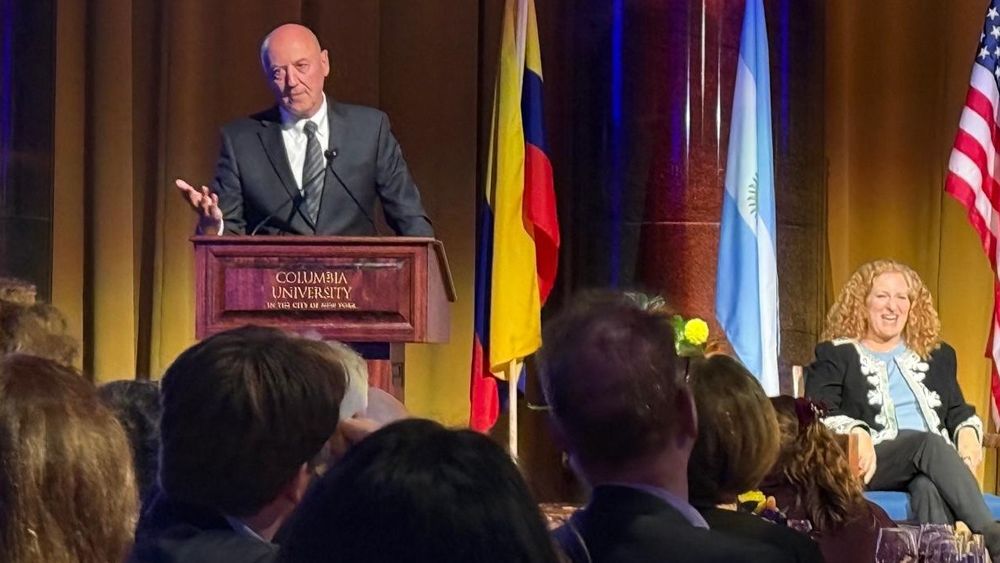
“The use of a public institution to harass critical media is one of the most sophisticated forms of indirect censorship,” warned Pierre Manigault, president of the IAPA. “When administrative, tax, or corporate mechanisms are used to pressure a media company, not only is press freedom undermined, but also freedom of enterprise, which is essential for independent journalism to exist,” said Manigault, president of Evening Post Publishing Inc. of Charleston, South Carolina, United States.
Martha Ramos, chair of the IAPA’s Committee on Freedom of the Press and Information, said that “these actions generate an intimidating effect that goes beyond a single company and send a troubling message to the rest of the country’s media ecosystem.” She added that “affecting ownership, legal stability, or governance of a media outlet is an indirect but highly effective way to condition its editorial line and weaken information pluralism,” said Ramos, editorial director of Organización Editorial Mexicana (OEM).
In its latest report on press freedom in Ecuador, the IAPA warned of a “media ecosystem marked by serious violations of press freedom.” The report highlights that “officials from the government of Daniel Noboa used social media and official channels to attack journalists and media outlets.” It cites, as an example, the Secretary of Public Integrity, José Julio Neira, who “linked the newspapers Expreso and Extra to alleged tax evasion schemes before any formal investigation existed, which was denounced as an attempt at political intimidation.”
The IAPA is a non-profit organization dedicated to defending and promoting freedom of the press and expression in the Americas. It comprises more than 1,300 publications from the western hemisphere and is based in Miami, Florida, United States.