"The Inter American Press Association (IAPA) reaffirmed during its 2026 Midyear virtual meeting that press freedom is facing a critical juncture in the hemisphere.
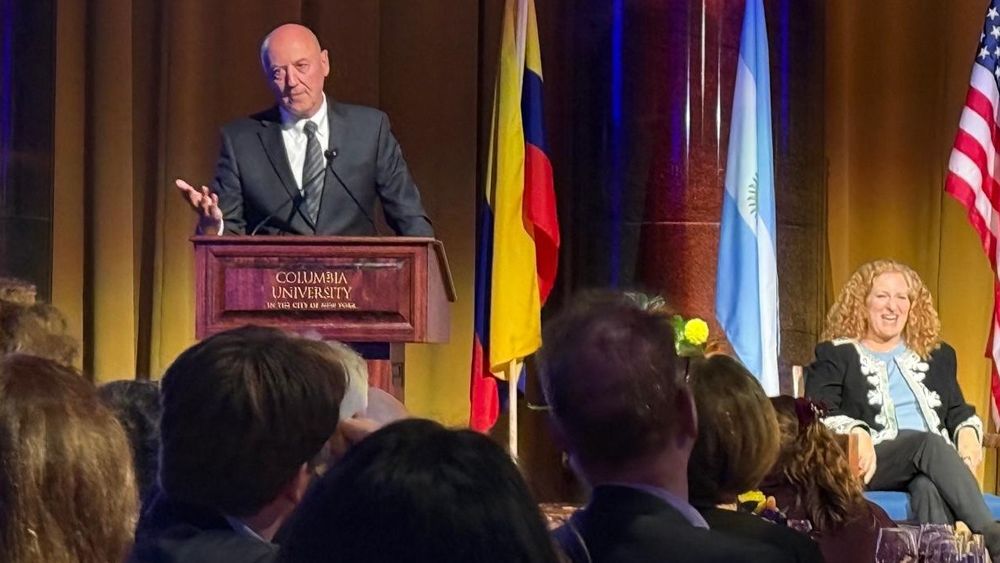
“What were once tactics primarily associated with authoritarian systems now cross borders, blur boundaries, and appear in places where democratic institutions were once thought to be strong,” said the organization’s president, Pierre Manigault.
In his opening remarks, the president of Evening Post Publishing Company of Charleston, South Carolina, warned that “more and more political leaders are using aggressive rhetoric that delegitimizes journalism, fuels polarization, and erodes public trust.” He stressed that when journalists are portrayed as adversaries, “it creates a climate in which intimidation thrives and self-censorship takes hold.”
He added that “when press freedom weakens in the United States, it sends a signal across the hemisphere and emboldens other governments to do the same.”
Indeed, harassment, restrictions on news coverage, direct intimidation, and administrative and judicial pressures encouraged by those in power are realities reflected in the vast majority of country-by-country reports presented at the meeting.
These anti-democratic practices are observed in regimes as diverse as the dictatorships of Nicaragua and Cuba, the autocratic transitional government that took power following the fall of Nicolás Maduro, and in countries with leaders elected through free elections but who have chosen a confrontational stance toward the press, such as the United States, El Salvador, Bolivia, Costa Rica, Colombia, Guyana, Honduras, and Paraguay. In Canada, proposed laws and regulations with intimidating effects have also emerged.
In an unprecedented event in a democracy, Argentina recently barred the 60 accredited reporters from entering the Casa Rosada, the seat of government, while President Javier Milei has disparaged “95% of journalists.”
The most violent attacks against journalists and media outlets over the past six months were recorded in Peru, a country experiencing a political process highly adverse to press work, and in Ecuador and Mexico, where harassment from those in power is compounded by the actions of organized crime, in an environment worsened by impunity for those who perpetrate violence.
In these three countries, two journalists were killed in each case during the period: Fernando Núñez and Mitzar Castillejos in Peru; Fernando Álvarez and Robinson del Pezo in Ecuador; and Miguel Ángel Beltrán Martínez and Carlos Castro in Mexico.
The situation is also dramatic in Haiti, where two reporters were kidnapped and remain missing. And this is how they must be regarded, even though unconfirmed reports claim they were killed. They are Osnel Espérance and Junior Célestin. The political and social chaos in the Caribbean country creates impunity for criminal gangs and extreme violence that produces “news deserts” where independent journalism is virtually impossible.
One of the resolutions adopted during the virtual meeting strongly condemns “acts of violence, threats, judicial harassment, stigmatization, and smear campaigns directed against journalists and media outlets.”
In Brazil, the pre-election period has been marked by an increase in violence, intimidation, and judicial harassment against journalists. However, there have been institutional advances, such as court rulings that strengthen press freedom, and the adoption of a protocol for the protection of journalists and the fight against impunity.
In Costa Rica, although the government has questioned judicial decisions in favor of media pluralism, progress has been made in protecting the press with the repeal of laws that criminalized journalists and imposed prison sentences.
In Colombia, by contrast, proposals to increase penalties in cases against journalists for libel and slander are gaining traction.
In Guatemala, there are restrictions on access to public information, but the Supreme Court’s decision to overturn three rulings against journalist and editor José Rubén Zamora stands out. Zamora endured a true judicial ordeal that kept him in prison, almost without interruption, since July 2022. On the second day of the meeting, Zamora delivered an emotional message thanking the IAPA for its support throughout this process.
The proliferation of excessive lawsuits against media outlets and journalists was the subject of a panel that examined the cases of the Vanguardia group in Saltillo, Mexico, and Granasa in Ecuador. Ongoing judicial, political, and economic pressures in Panama were also highlighted, underscoring the need to advance anti-SLAPP legislation to swiftly dismiss lawsuits intended to silence dissenting voices.
In the Dominican Republic, reform of the law on Freedom of Expression and Dissemination of Thought remains without consensus. In Chile, following the recent change of government, there has been no progress on legislation to protect journalists, and new challenges are expected from personal data regulations set to take effect in December.
During the Midyear Meeting, participants emphasized that the harsh reality facing journalism across much of the continent coincides with the absence of active policies to ensure the sustainability of the press as a vital contributor to strengthening democratic debate.
In that regard, the opportunities, risks, and impacts of advances in artificial intelligence were also addressed. “Press freedom cannot exist without sustainable media,” said President Manigault, reaffirming the IAPA’s commitment to innovation to help organizations adapt to a rapidly evolving environment. The AI Product Lab, developed with support from the Google News Initiative, presented several prototypes created by 20 media outlets from the region during the meeting.
Manigault also announced the reactivation of the Rapid Response Unit, with support from UNESCO’s Global Media Defence Fund, to help curb impunity in crimes against the press. The IAPA will also continue supporting the Latin American Network of Journalism in Exile (RELPEX).
“The IAPA’s mission has not changed; the urgency has,” Manigault said, “because an attack on journalism is an attack on democracy, wherever it occurs.”
The IAPA is a non-profit organization dedicated to defending and promoting freedom of the press and expression in the Americas. It comprises more than 1,300 publications from the western hemisphere and is based in Miami, Florida, United States.