Fewer clicks, more community: the future of journalism depends on the relationship with the reader.
A panel explores how media growth may come less from reaching more people and more from deepening ties with existing audiences.
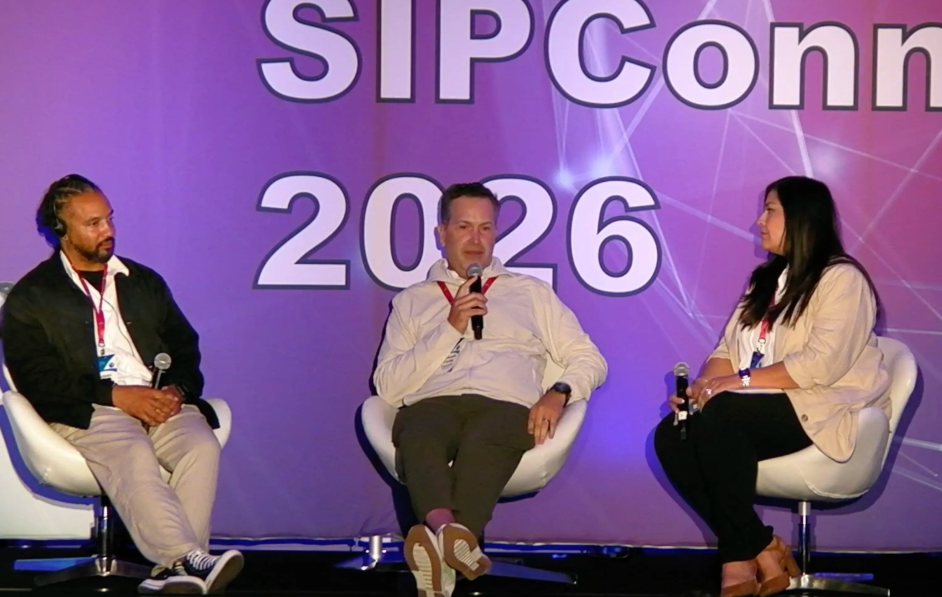
From left to right: Delano Massey, Managing Editor of Axios Local, United States; Armando Castilla, Director of Vanguardia, Mexico; and Mariana Belloso, Project Manager at the Inter American Press Association (IAPA).
Fewer clicks, more community: the future of journalism depends on the relationship with the reader.
Journalism is undergoing a paradigm shift: moving away from the mass pursuit of clicks to build deep and sustainable relationships with audiences. This was the focus of the panel “From Reach to Relationship: The New Stage of Growth in Media,” moderated by Mariana Belloso, project manager at the IAPA, and featuring Delano Massey, Managing Editor of Axios Local, and Armando Castilla, Director of Vanguardia.
Axios Local: “Reach is rented, relationships are owned”
Delano Massey began his remarks by presenting a fundamental premise for modern journalism: success does not lie in “winning the internet,” but in joining the conversations people are already having. After leaving CNN in 2022 to seek answers about the future of local journalism, Massey implemented at Axios Local a model based on “Smart Brevity” through five strategic pillars:
Vanguardia and the birth of Vera
For his part, Armando Castilla presented Vera, Vanguardia’s new digital subscription initiative, born after years of learning and mistakes with traditional models. Castilla explained that although previous experiments showed that audiences were willing to pay, there were structural barriers that prevented the success of a generic paywall.
Castilla identified three key barriers: editorial (lack of a clear value proposition), technological (an unsustainable and costly chain of providers), and decision-making (constant rework due to the absence of a unified product vision).
To overcome these obstacles, Vanguardia created Vera, a product defined by three concepts: “It is read, it is listened to, it is asked.”
The future growth of media will not come from reaching more people, but from deepening the bond with those already present.